Sherwood Anderson: A Writer in Marion
How the nationally known author of Winesburg, Ohio found his final home in the mountains of Southwest Virginia.
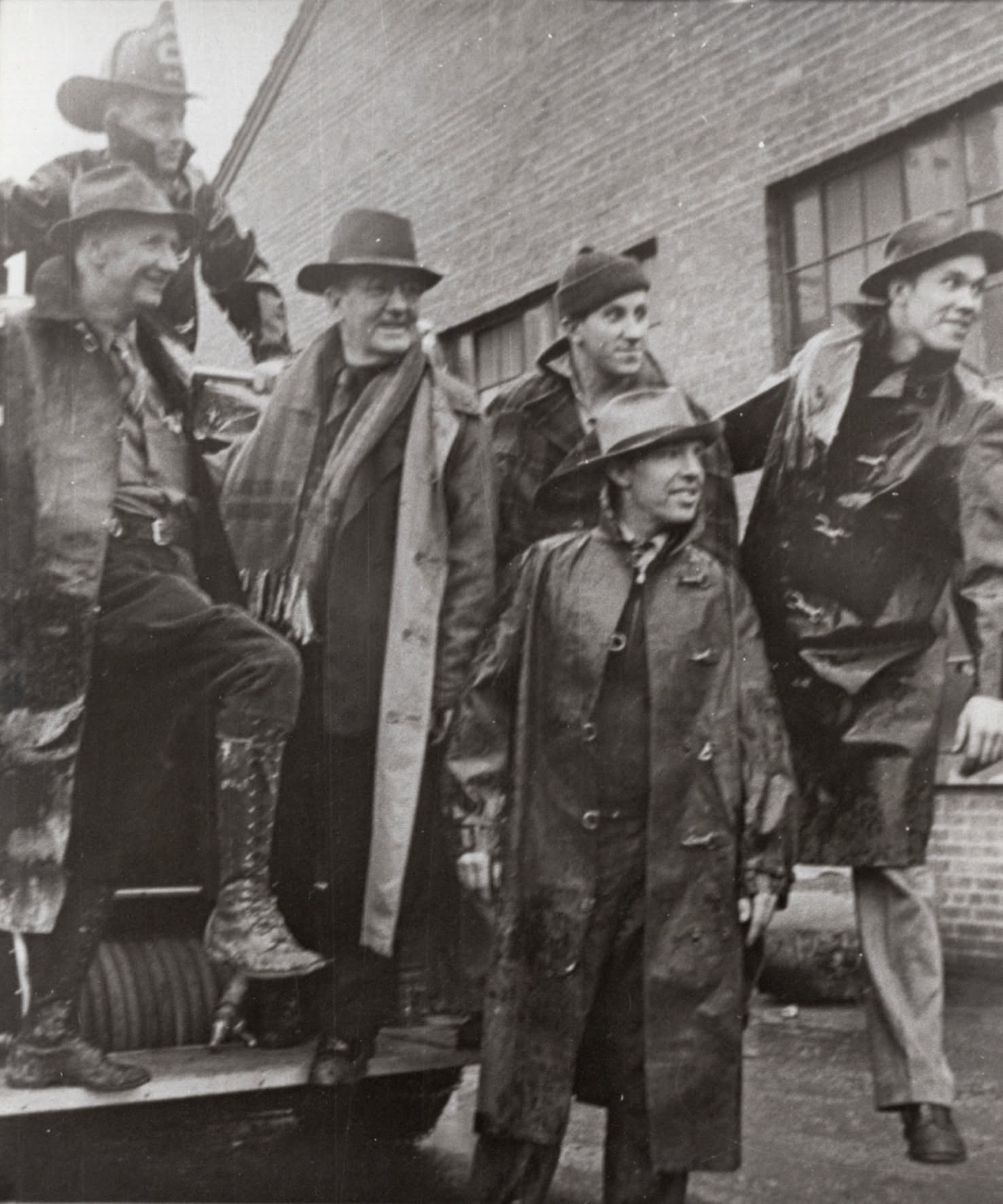
Best known for Winesburg, Ohio, Sherwood Anderson helped shape modern American fiction through his powerful portraits of small-town life and the private struggles of ordinary people. Though his literary career connected him to cities such as Chicago, New Orleans, and New York, the final chapter of his life was deeply rooted in Marion and the mountains of Southwest Virginia.
At Ripshin, his home near Troutdale, Anderson found a place to write, reflect, and observe the changing world around him. In Marion, he became involved with local newspapers, married Marion native Eleanor Copenhaver, and left a legacy that still connects Smyth County to American literary history.
This exhibit explores Sherwood Anderson’s life, work, and lasting connection to Marion, Virginia — a place that became more than a retreat. It became home.
Sherwood Anderson at a Glance
September 13, 1876, in Camden, Ohio
March 8, 1941, while traveling in Panama
Round Hill Cemetery in Marion, Virginia
Winesburg, Ohio, published in 1919
Writer, novelist, short story author, and newspaper owner
Lived at Ripshin near Troutdale, owned Marion newspapers, and married Marion native Eleanor Copenhaver
Early Life and Literary Beginnings
Who Was Sherwood Anderson?
Before Sherwood Anderson became connected to Marion, Virginia, he had already lived many lives. Born in Ohio in 1876, Anderson worked as a laborer, served in the military, entered the business world, and eventually became a successful advertising man.
Yet Anderson felt increasingly dissatisfied with the life expected of him. In 1912, after leaving his office in Elyria, Ohio, he experienced a personal and professional crisis that became a turning point in his life. He left the world of business behind and turned more fully toward writing.
Anderson’s fiction focused on the inner lives of ordinary people — shopkeepers, workers, dreamers, lonely souls, and small-town residents whose hopes and struggles were often hidden beneath the surface of everyday life.
The Book That Made His Name: Winesburg, Ohio
Published in 1919, Winesburg, Ohio became Sherwood Anderson’s best-known work and helped establish his reputation as an important American writer. The book is a collection of connected stories set in a fictional small town, where each chapter reveals the private struggles, disappointments, desires, and memories of its residents.
Rather than presenting small-town life as simple or sentimental, Anderson showed it as emotionally complex. His characters were ordinary people, but their inner lives were treated with seriousness and sympathy. This approach helped influence later American writers and made Anderson an important figure in the development of modern American fiction.
A New Chapter in the Mountains
Coming to Southwest Virginia
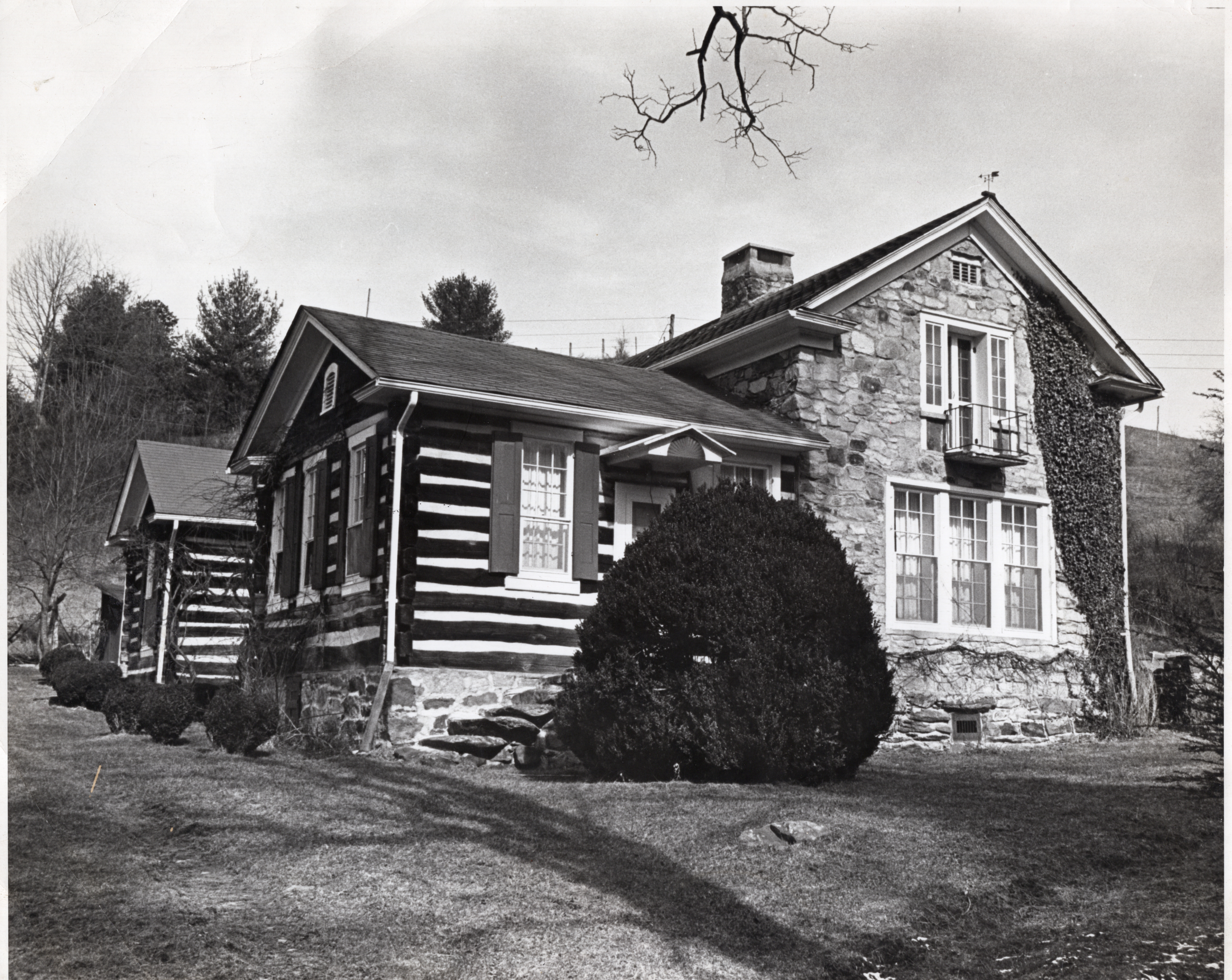
By the 1920s, Sherwood Anderson was already a nationally known writer. Yet his life and work soon became closely tied to the mountains of Southwest Virginia. Drawn to the region’s landscape, pace, and people, Anderson purchased Ripshin, a farm near Troutdale, Virginia, in 1926.
Ripshin gave Anderson a place apart from the cities and literary circles that had shaped much of his earlier career. From this mountain home, he continued to write, observe, and think about the changing world around him. Southwest Virginia became more than a retreat; it became one of the defining places of his later life.
Through Ripshin, Marion, and the surrounding communities, Anderson’s national literary story became connected to local history. His time in Smyth County would shape his writing, his newspaper work, his relationships, and the way he is remembered today.
Marion and the Local Press
The Famous Author as Country Editor
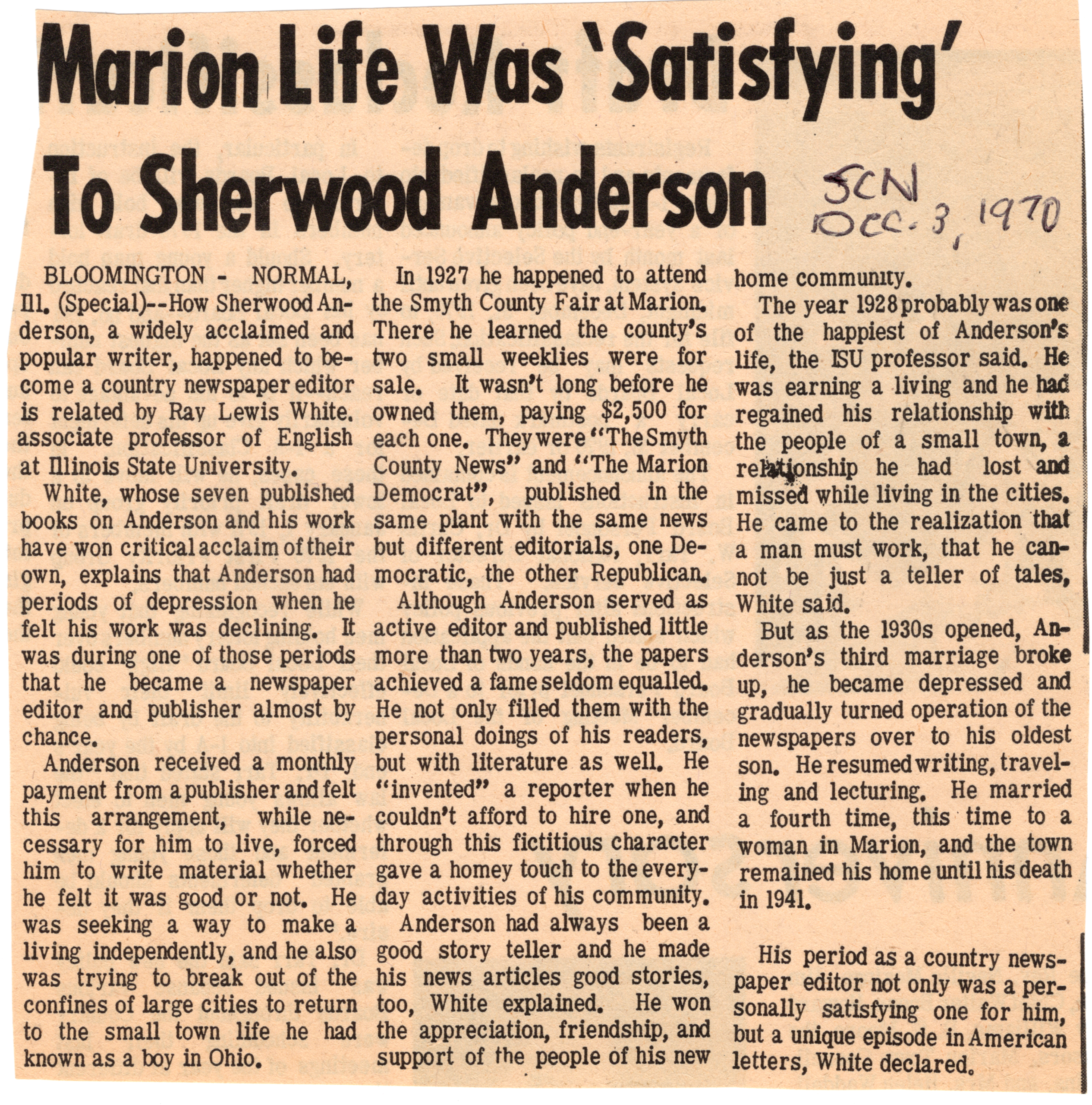
Sherwood Anderson’s connection to Marion went beyond his home at Ripshin. In the late 1920s, he became involved with local newspapers, including the Smyth County News and the Marion Democrat. Through newspaper work, Anderson became part of the public life of Smyth County.
Local newspapers were central to community life in the early twentieth century. They carried political news, local events, business advertisements, public notices, social announcements, and the everyday stories of the people who lived in the area. For Anderson, the newspaper office offered another way to observe and engage with the world around him.
As a writer, Anderson was already known for his interest in ordinary people and small-town life. In Marion, that interest became part of his daily work. His role as a newspaper owner connected his national literary career to the local concerns, conversations, and personalities of Southwest Virginia.
Marriage, Reform, and Marion
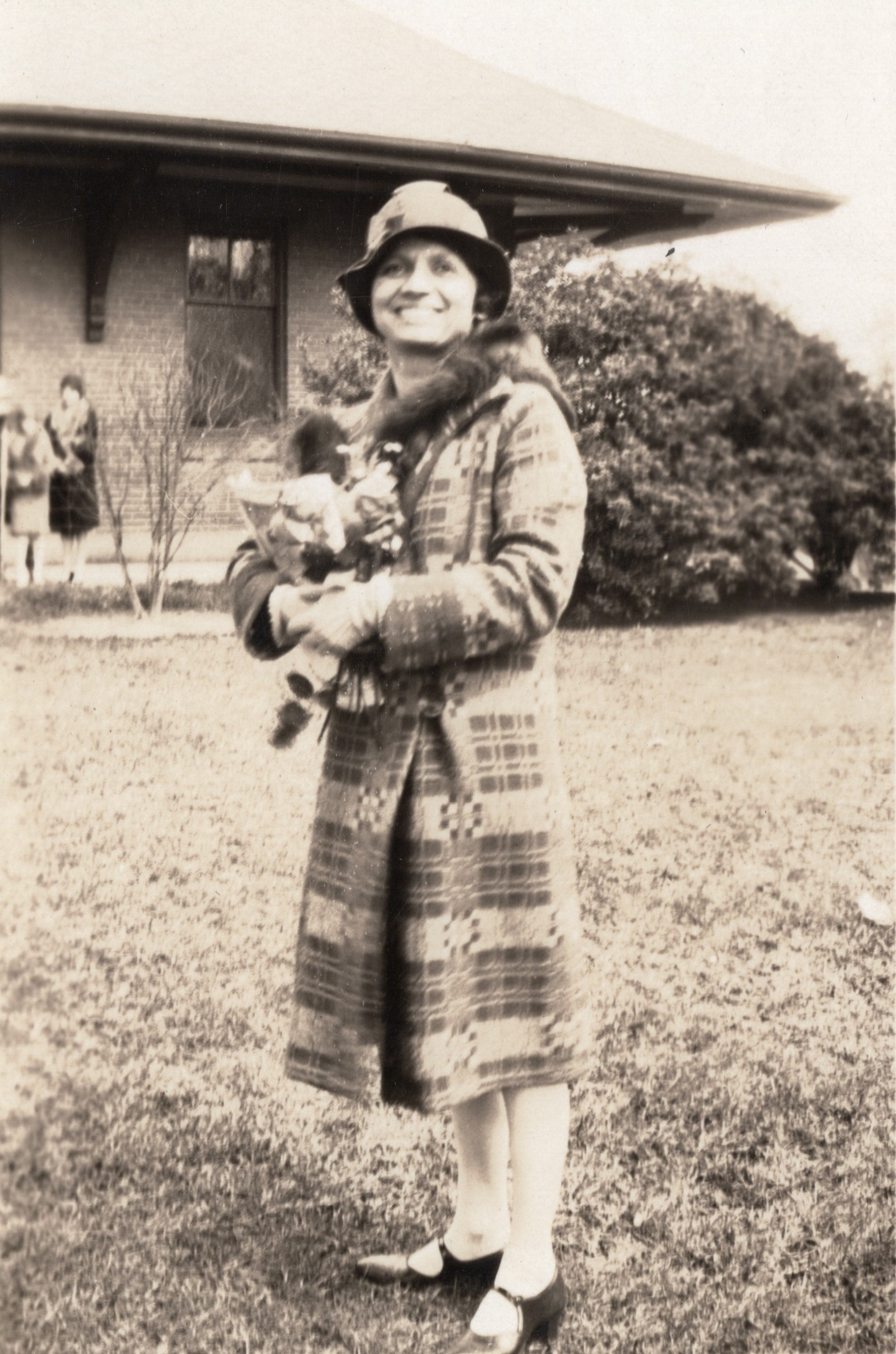
Sherwood and Eleanor
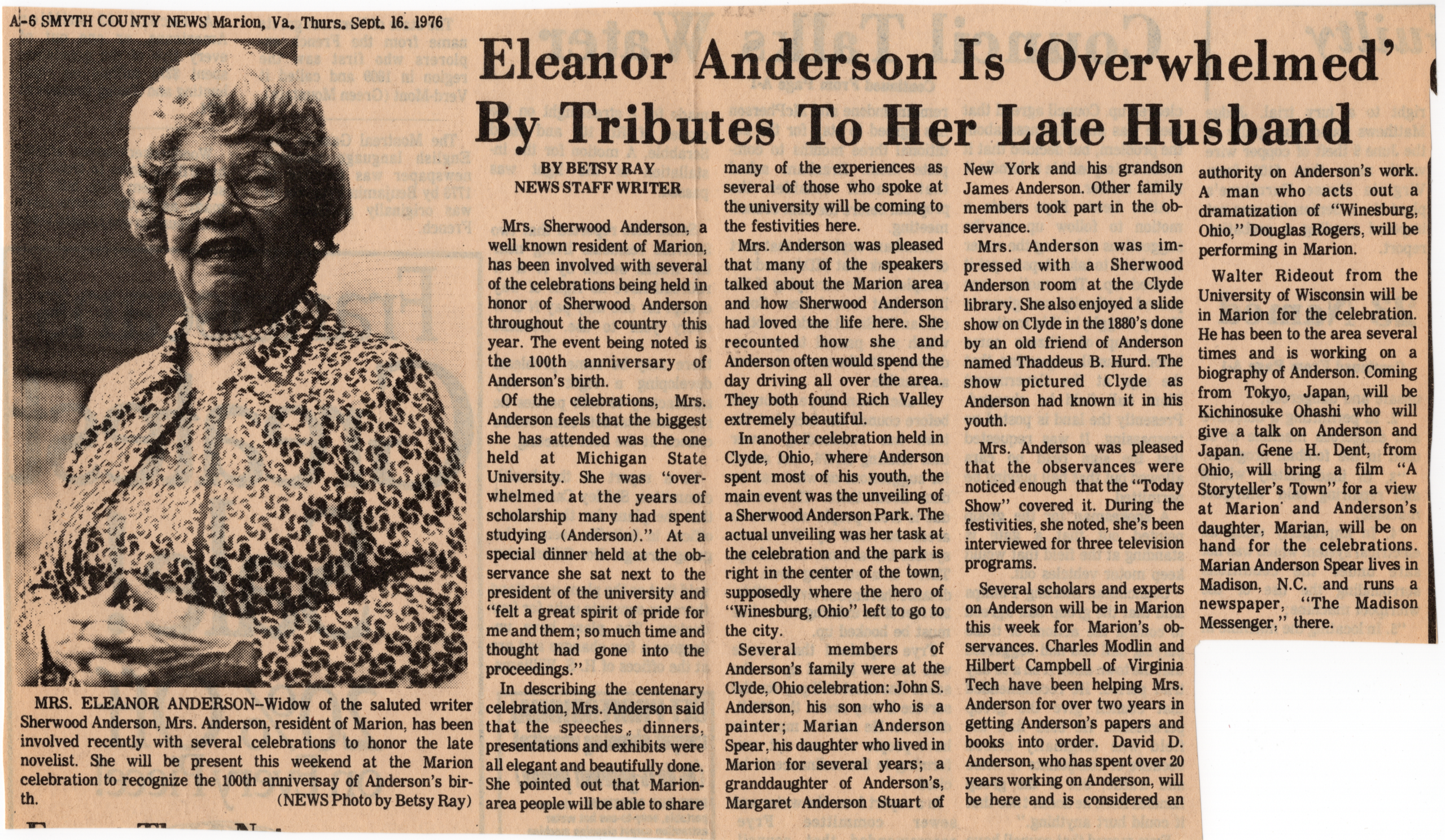
Sherwood Anderson’s connection to Marion deepened through Eleanor Copenhaver, a Marion native whose own life and work deserve recognition. Eleanor was involved in reform efforts and worked with the YWCA’s industrial program, where she focused on the lives and working conditions of women in industry.
Anderson and Eleanor married in 1933. Their relationship connected Anderson more closely to Marion, but it also connected him to broader questions of labor, industry, social reform, and life in the changing South.
Together, Sherwood and Eleanor traveled through southern mill towns and industrial communities. These experiences shaped Anderson’s later writing and strengthened his interest in the lives of working people — a subject that had long been central to his understanding of American life.
Life, Not Death, Is The Great Adventure
Death, Burial, and Legacy in Marion
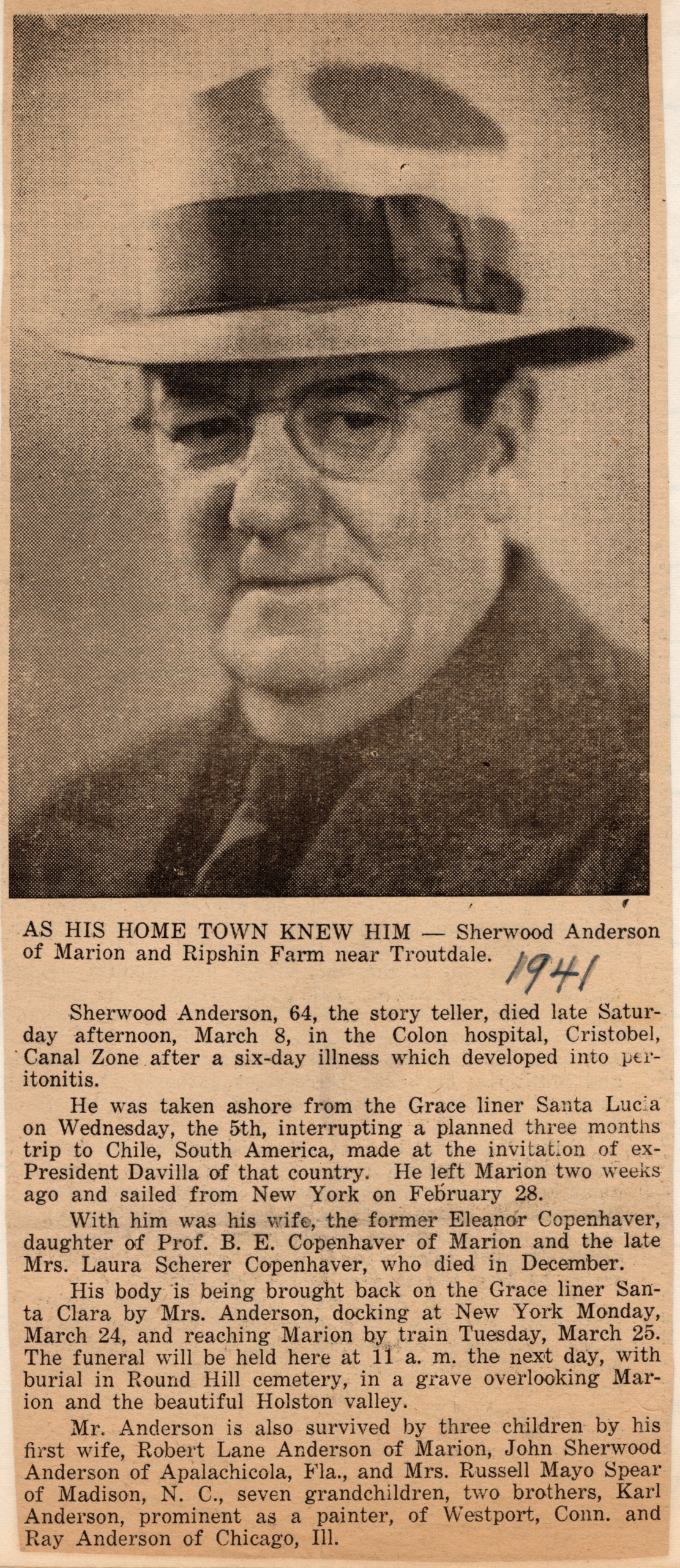
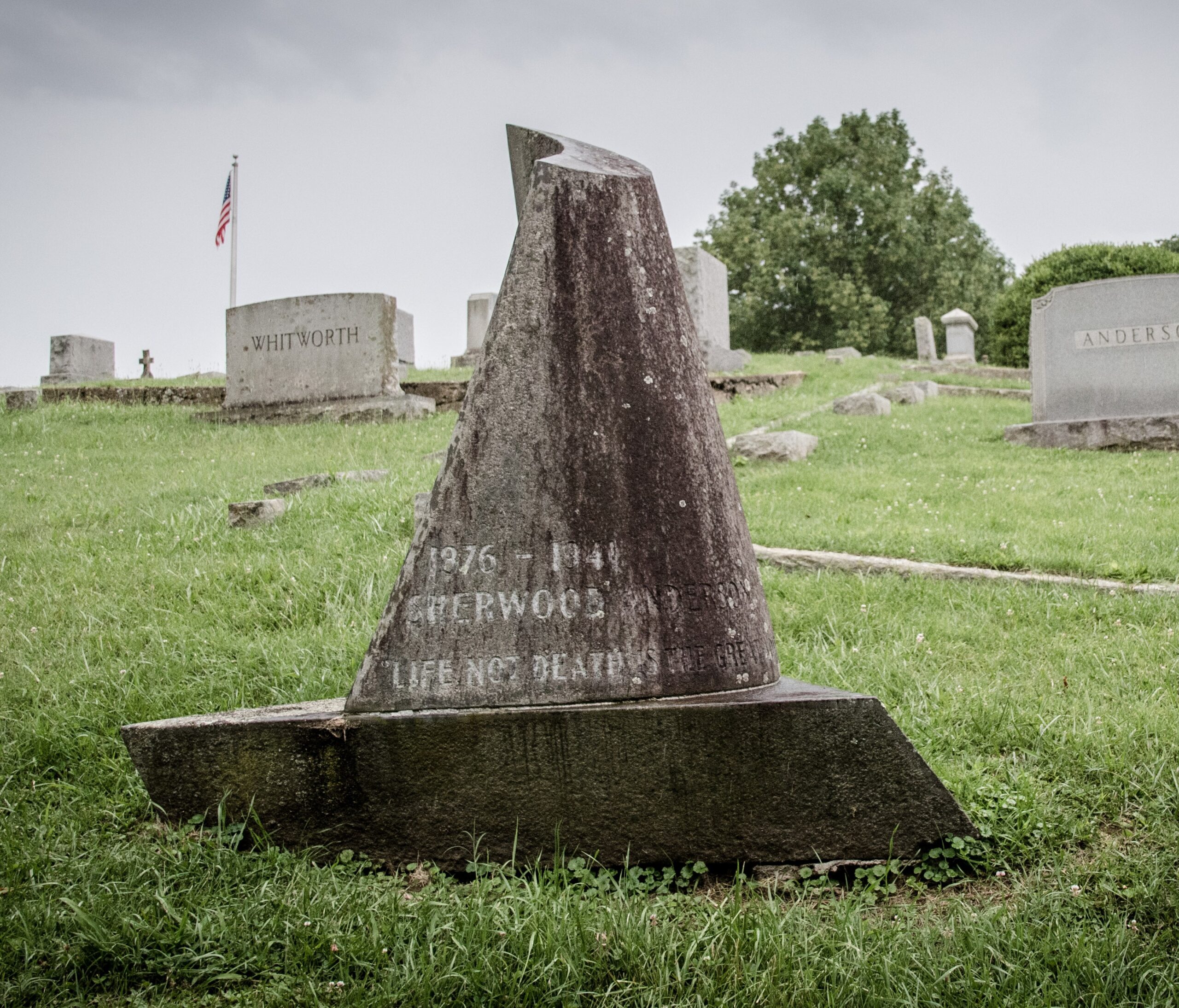
In 1941, Sherwood and Eleanor Anderson set out on a trip to South America. During the journey, Anderson became seriously ill and died in Panama on March 8, 1941. His body was returned to Marion, Virginia, where he was buried in Round Hill Cemetery.
Anderson’s funeral brought his national literary story back to the local community he had come to call home. In Marion, friends, family, neighbors, and admirers gathered to remember a writer whose final years were deeply connected to Smyth County.
His grave marker bears the words, “Life, not death, is the great adventure.” The phrase offers a fitting conclusion to the story of a writer who repeatedly remade himself — from businessman to author, from city dweller to mountain resident, from national literary figure to Marion newspaper man.
Today, Anderson’s connection to Marion remains an important part of Smyth County’s cultural and literary history. His years at Ripshin, his work with local newspapers, his marriage to Eleanor Copenhaver, and his burial in Marion all remind us that national stories are often rooted in local places.
Additional Materials
Sherwood Anderson Digital Collection
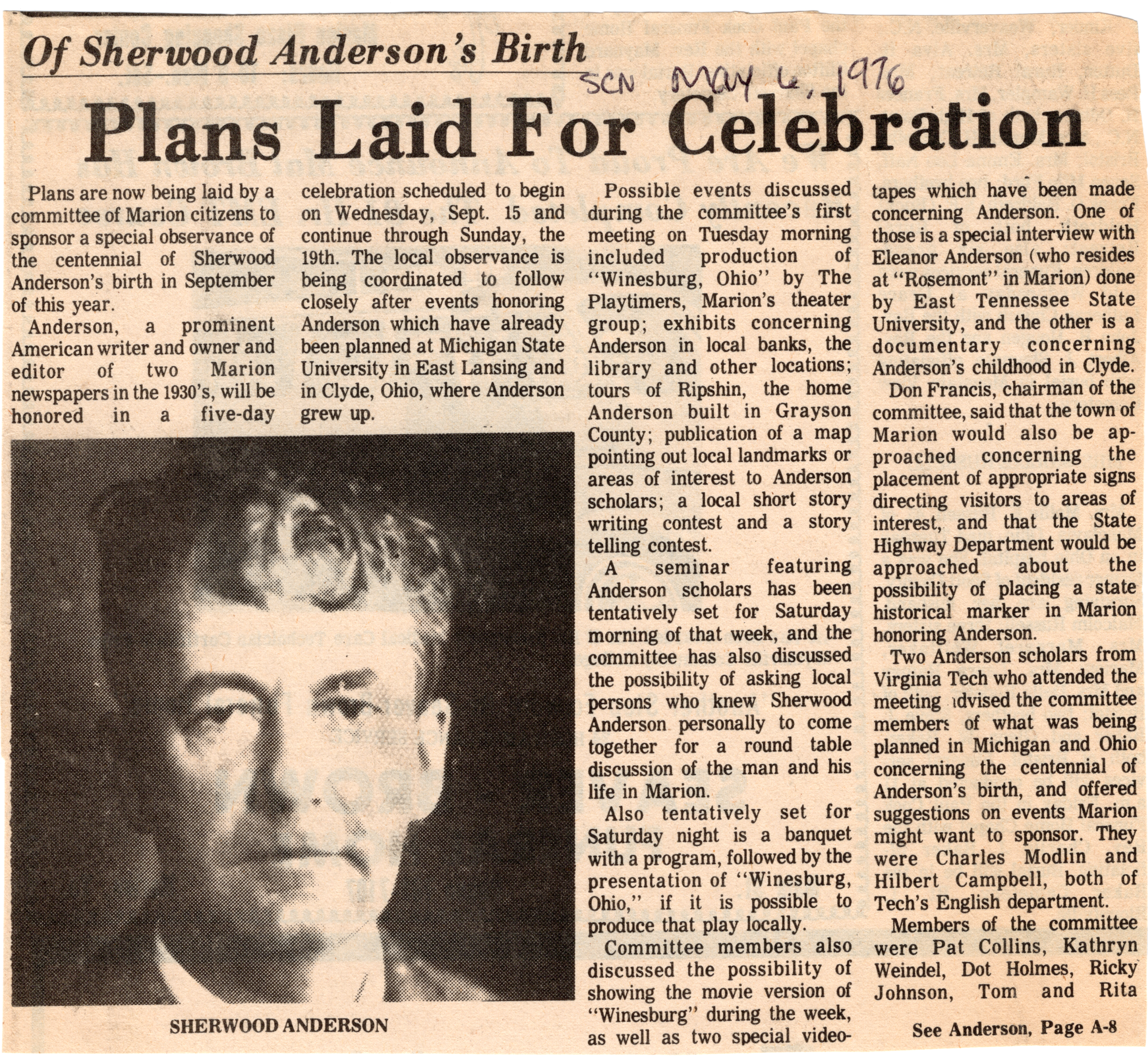
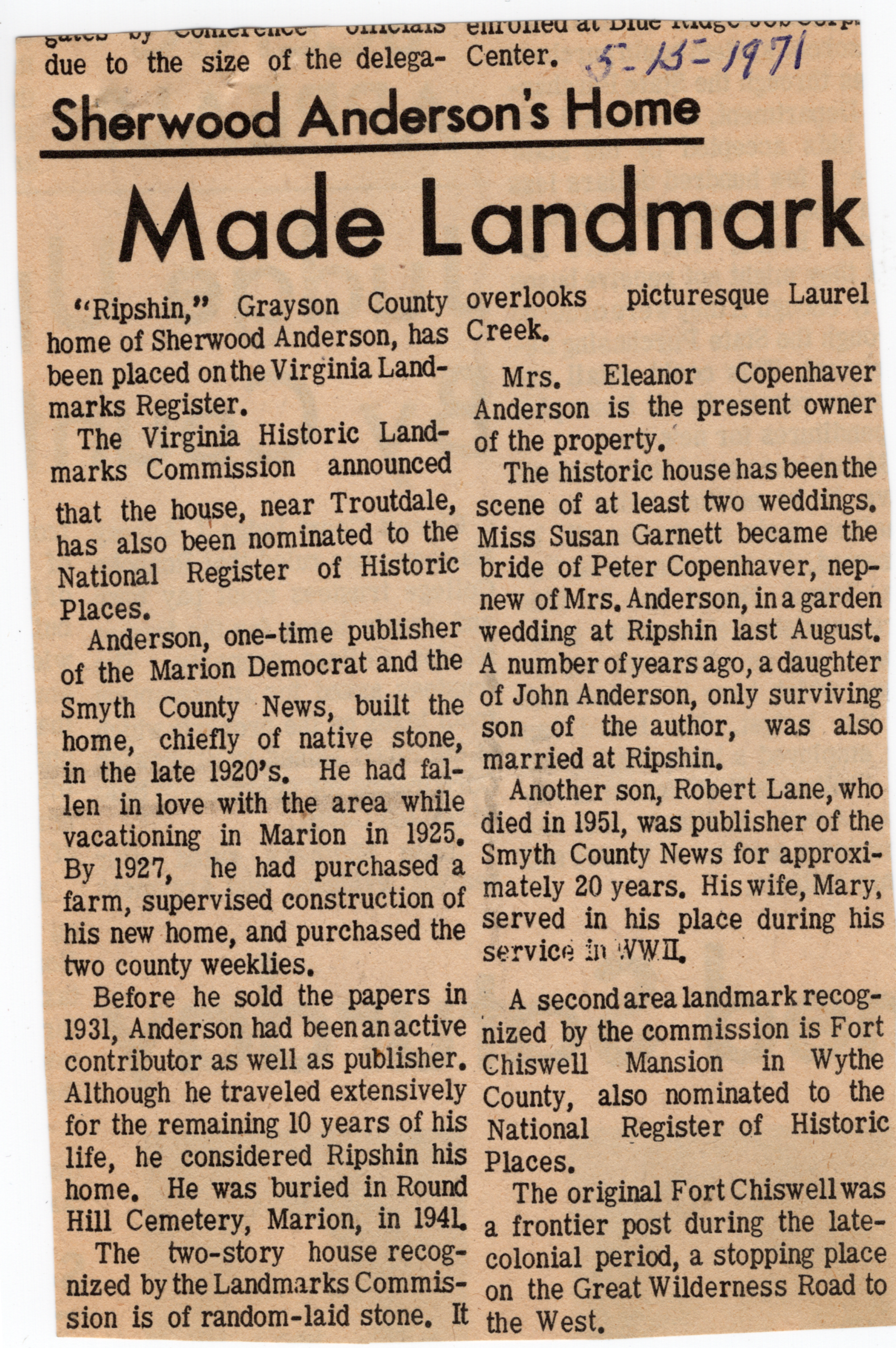
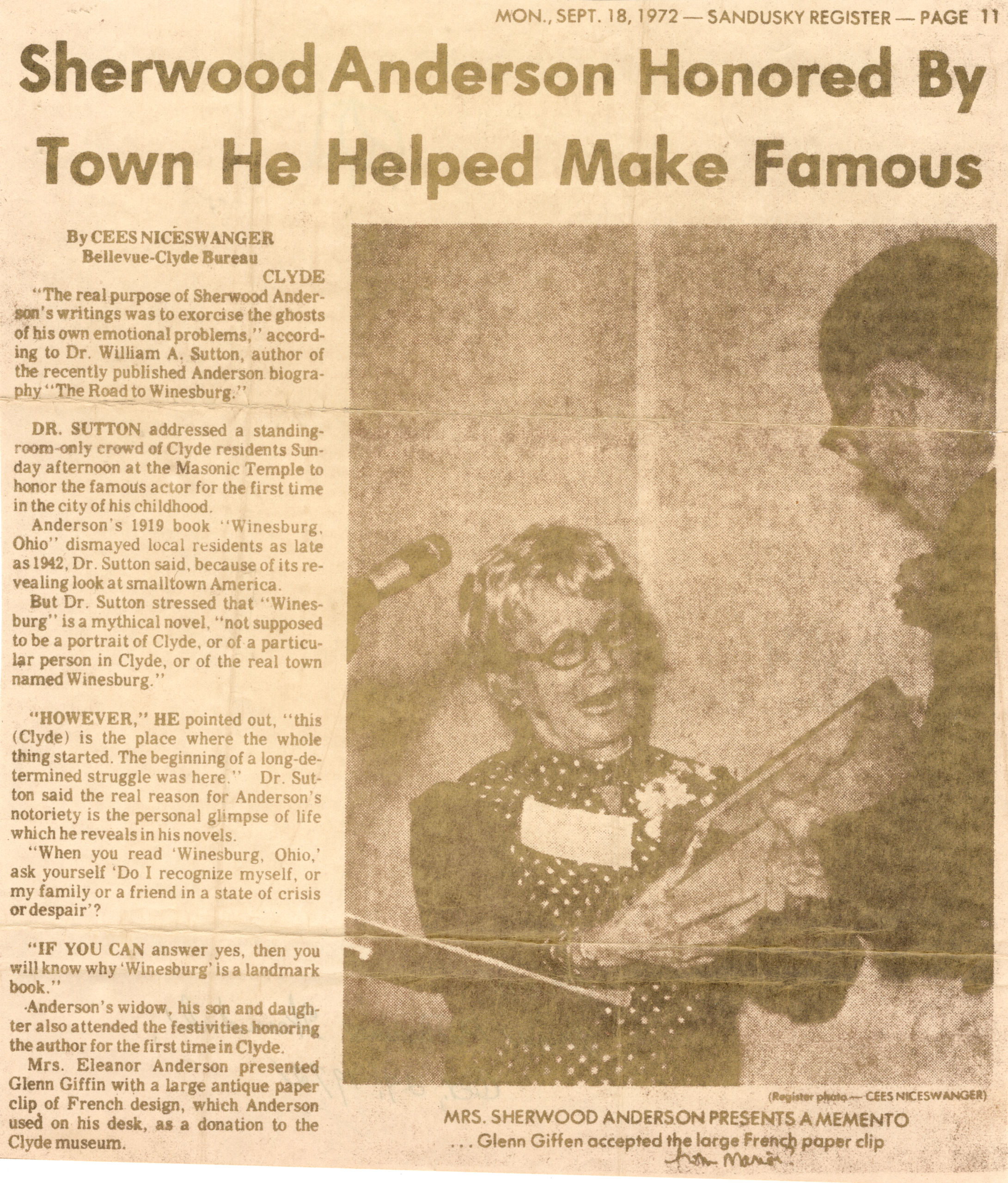
The following materials offer additional glimpses into Sherwood Anderson’s connection to Marion, his work with local newspapers, and the way his life and legacy appeared in print. (click each image to enlarge)